St Breock Downs Monolith

St Breock Downs Monolith, Rosenannon, Cornwall PL30 5PN, UK
1-99 Years

Description

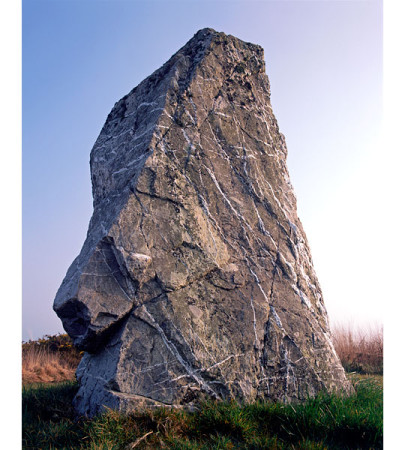
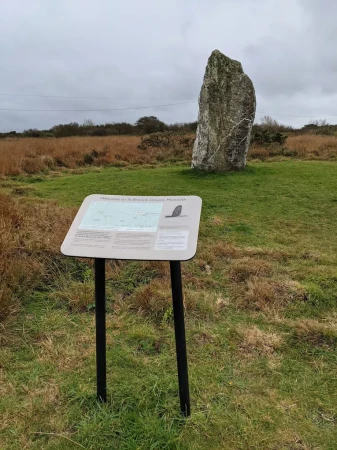
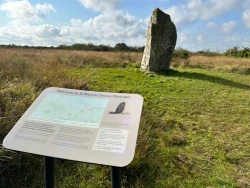
St Breock Downs Monolith Originally five metres high and weighing some 16.75 tonnes, St Breock Downs Monolith is Cornwall's largest and heaviest prehistoric monolith. It stands on the summit of St Breock Downs, offering wonderful views. 

This massive stone stands near the summit of the St Breock Downs, offering beautiful views of the surrounding countryside and across to the sea. It is the largest and heaviest monolith in Cornwall, weighing about 16.75 tonnes, and probably dates to the late Neolithic to mid-Bronze Age (around 2500–1500 BC). 

Free Entry. If you are looking for Best place for day out with kids and families then this is the perfect destination offering fun, adventure, and unforgettable memories for everyone.

Features

  • Free
  • Host birthday parties: No

Features

  • History of St Breock Downs Monolith: This massive stone stands near the summit of the St Breock Downs, offering beautiful views of the surrounding countryside and across to the sea. It is the largest and heaviest monolith in Cornwall, weighing about 16.75 tonnes, and probably dates to the late Neolithic to mid-Bronze Age (around 2500–1500 BC). 
  • Standing stones or monoliths are rare in England but are scattered across the country, with concentrations in Cornwall, the North Yorkshire Moors, Cumbria, Derbyshire and the Cotswolds. Their purpose remains a subject for speculation today.
  • Their accompanying features show that they had a ritual function: they are among several types of monument of late Neolithic or Bronze Age date that are often found, when excavated, to be associated with evidence of cremation. They may also have functioned as markers for routeways, territories, graves or meeting-points.
  • Description: The monolith on St Breock Downs stands within a low stone mound or cairn, which measures about 33 feet (10 metres) across, and is formed from the local Devonian shale which has extensive feldspar veining.
  • The stone itself is 16 feet (4.9 metres) long but it now only stands just over 10 feet (3 metres) high as it has a marked lean to the north.
  • It fell over in 1945, and was re-erected in 1956 after a small excavation had been carried out. This showed that the stone stood in a setting of quartz pebbles below which were two small, shallow hollows; features which have been found to contain human bone or ashes at other similar, sites.
  • The open landscape of heath and pasture surrounding the St Breock Downs Monolith contains many other Bronze Age ritual monuments, with which the stone was probably associated. These include at least one other standing stone, and a series of barrows that extend up to 4 miles to the west.
  • The fascination of the monolith, also known as the St Breock Longstone or Men Gurta, is reflected by its prominence in local folklore as a medieval and later meeting-place. It occurs in antiquarian records as early as 1613, and was later adopted as a St Breock parish boundary marker.

Facilities

  • Parking: There is a layby a short walk away from the path that leads to the monument.
  • Dogs: Dogs on leads are welcome.

Price

Price: Free

Birthday Parties

Offer Birthday Parties: No

Open any reasonable time during daylight hours.

Address: St Breock Downs Monolith, Rosenannon, Cornwall PL30 5PN, UK

Post Code: PL30 5PN

Council: Cornwall

County: Cornwall

  • Road Access: Located on St Breock Downs; 3 1⁄2 miles SW of Wadebridge off unclassified road to Rosenannon.
  • Bus Access: The nearest stop to St Breock Downs Monolith is St Jidgey Halfway House. To reach the St Breock Downs involves a walk of 2.5miles / 4.0kms along the Saint’s Way. Ordnance Survey Explorer Map 106 is advised. Catch Go Cornwall Bus 95 from Newquay Bus Station or from Wadebridge Bus Station to St Jidgey. An alternative for experienced walkers would be to extend the walk on the Saint’s Way by walking from St Jidgey to Withiel (or vice versa). Travel Cornwall Bus 405 operates a limited service to Withiel Mon to Fri only. For an even longer walk you could follow the Saints Way from St Jidgey to Lanivet (or vice-versa). Go Cornwall Buses 26 and 89 offer a Daily service to / from Lanivet.
  • Train Access: The nearest station is Roche (6.4miles / 10.3kms), though there are no direct bus links from Roche to St Jidgey. Stations with bus links to St Jidgey are Newquay (13.1miles / 21.1kms) - catch Bus 95 from Great Western Hotel opposite the station, or Bodmin Parkway (11.6miles / 18.7kms) - catch Bus 11 from outside the station to Wadebridge, then change to Bus 95 for St Jidgey.
  • Bicycle Access: Find this site on The National Cycle Network.
  • Parking: There is a layby a short walk away from the path that leads to the monument.

0

0 Reviews

Rating breakdown

5
80% Complete (danger)
0
4
80% Complete (danger)
0
3
80% Complete (danger)
0
2
80% Complete (danger)
0
1
80% Complete (danger)
0

Get the best blog stories into your inbox!