Southwick Priory

Description

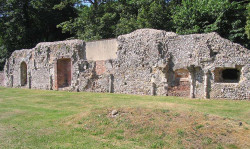
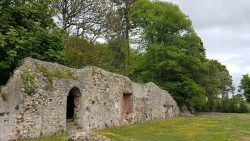
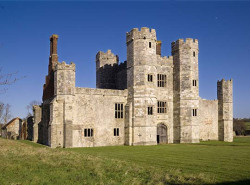
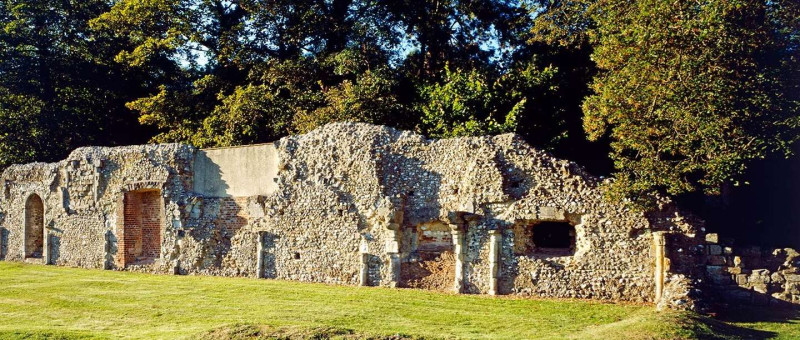
Southwick Priory in Hampshire was originally founded for Augustinian canons in about 1128 within the walls of nearby Portchester Castle, but the canons had moved to the present site within 20 years. After its suppression in 1538 Southwick was converted into a mansion, and today one wall of the priory and earthworks survive.

This small monastery was originally founded in about 1128, for canons (priests) of the Augustinian order. It began life within the walls of nearby Portchester Castle, before the canons moved to Southwick in about 1150. The priory had an important shrine to the Virgin Mary, which was visited by local people and kings, including Henry VIII. 

Free Entry. If you are looking for Best place for day out with kids and families then this is the perfect destination offering fun, adventure, and unforgettable memories for everyone.

Features

  • Free
  • Host birthday parties: No

Features

  • History of Southwick Priory: This small monastery was originally founded in about 1128, for canons (priests) of the Augustinian order. It began life within the walls of nearby Portchester Castle, before the canons moved to Southwick in about 1150. The priory had an important shrine to the Virgin Mary, which was visited by local people and kings, including Henry VIII.
  • Henry VIII closed the priory in 1538 and its buildings were converted soon afterwards into a mansion. The surviving wall – from what was once a large complex of buildings – is the north side of the canons’ refectory, or dining hall. It formed one range of the four-sided monastic cloister, with the church on the opposite side.
  • Early history: William Pont de l’Arche, sheriff of Hampshire and lord of Portchester Castle, founded a religious house in the castle in about 1128. It included a church dedicated to St Mary that was staffed by a community of Augustinian priests (canons). Augustinian canons were a versatile hybrid order of priest-monks, ideally suited to a small religious house within a castle.
  • The refectory building: The ruin is part of the canons’ refectory building, which formed the south side of the monastic cloister. The surviving wall is the north wall of this range: there are more foundations of the building in the grassed area immediately south. Most of the wall relates to the lower storey of the building, although there are some surviving parts of the upper floor, which was the dining hall itself.
  • The laver: Monasteries had strong traditions of physical and moral cleanliness, and the canons had to wash their hands before climbing the stairs to their refectory. During conservation work in 1984 on the surviving wall, the remains of an elaborate 12th-century handwashing ‘laver’ were discovered, bricked up on the north (cloister) side of the wall. Here the canons stood in front of a 3.8-metre-long stone trough filled with piped water. The trough does not survive, but archaeologists recorded a lead pipe in 1983.
  • The medieval library: The priory had a small library, which was probably not a separate building, instead comprising some shelving and study space in one of the cloister walks – no doubt a cold place to study in the Hampshire winter. Fourteen books from the library survive, including normal monastic library items such as Latin sermons and bible commentaries.
  • Disaster and Dissolution: A double disaster hit the priory in the 1510s. In November 1512 the church steeple was struck by lightning and the church burned for three days and nights, destroying the steeple, the bells and a large part of the roof, as well as books, vestments and ornaments. Prior Thomas Kent had the roof repaired and the tower rebuilt, but this then collapsed in September 1518.
  • The Jacobean mansion: Daniel Norton and his wife, Honora (John White’s great-granddaughter), inherited the property in 1607 and built a more up-to-date mansion, Southwick Park. It had three large ranges around a courtyard, immediately south of the old medieval cloister and Tudor mansion.
  • A picturesque ruin: In the first decade of the 19th century Thomas Thistlethwayte MP (a descendant of the Nortons) inherited the estate and demolished the old Jacobean house.

Facilities

Parking: Parking in public car park next to D Day command Centre. Walk out the main gate of the car park, entrance to Southwick Pirory is directly oppposite. Follow the walking route along to reach Southwick Priory.

Price

Price: Free

Birthday Parties

Offer Birthday Parties: No

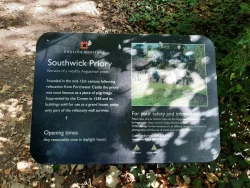
Open any reasonable time during daylight hours.

Address: Southwick, Fareham, Hampshire, UK

Post Code: PO17 6ED

Council: Winchester

County: Hampshire

  • Road Access: Fully accessible through Southwick village, signposted. Please park in public car park next to D Day command Centre. Walk out the main gate of the car park, entrance to Southwick Pirory is directly oppposite. Follow the walking route along to reach Southwick Priory.
  • Bus Access: The only public transport is the Southwick Taxishare service 38.
  • Bicycle Access: Find this site on The National Cycle Network.
  • Parking: Parking in public car park next to D Day command Centre. Walk out the main gate of the car park, entrance to Southwick Pirory is directly oppposite. Follow the walking route along to reach Southwick Priory.

0.00

0 Reviews

Rating breakdown

5
80% Complete (danger)
0
4
80% Complete (danger)
0
3
80% Complete (danger)
0
2
80% Complete (danger)
0
1
80% Complete (danger)
0

Get the best blog stories into your inbox!