Royal Garrison Church, Portsmouth

Description

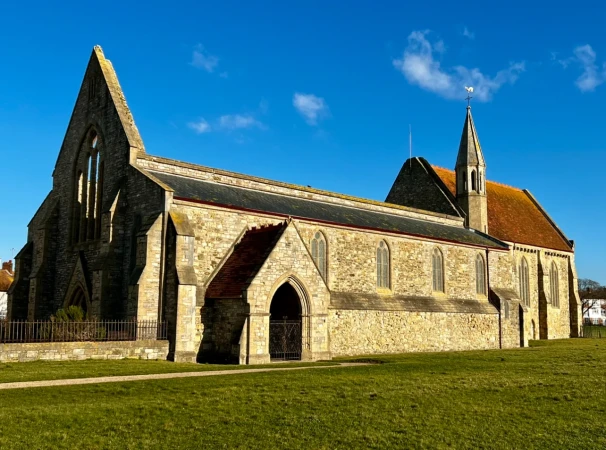
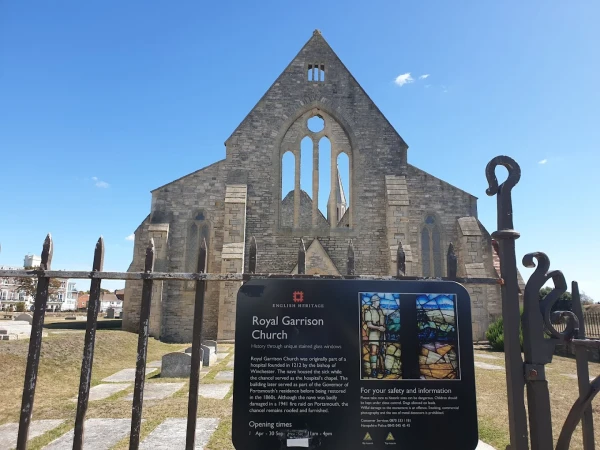
Royal Garrison Church was built in about 1212 by the Bishop of Winchester as part of a hospital and hostel for pilgrims. Used as an ammunition store after the Reformation, it became part of the governor of Portsmouth’s house during Elizabeth I’s reign. 

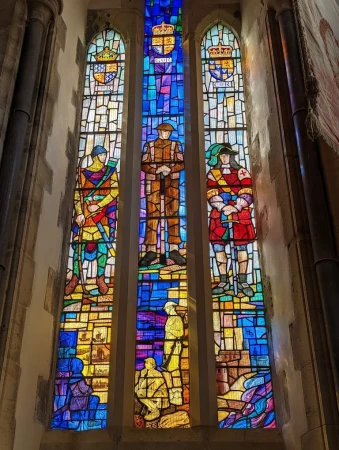
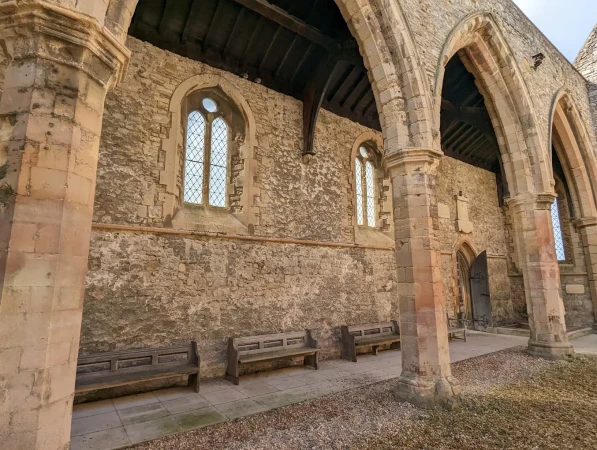
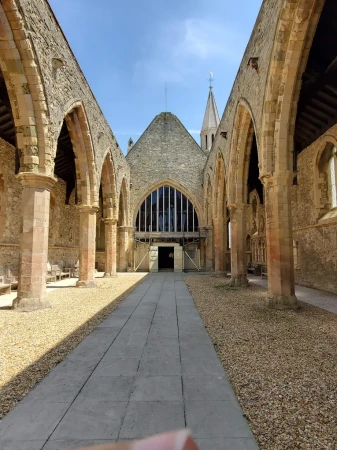
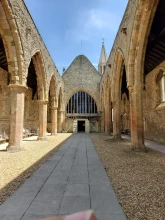
The church was restored in the 19th century, and although the nave was badly damaged in a 1941 firebomb raid on Portsmouth, the chancel is still roofed and furnished. Fine 20th-century stained-glass windows depict scenes from the Second World War and from the church’s own history. 

Free Entry. If you are looking for Best place for day out with kids and families then this is the perfect destination offering fun, adventure, and unforgettable memories for everyone.

Features

  • Free
  • Host birthday parties: No

Features

  • History of Royal Garrison Church, Portsmouth: The Garrison Church was founded in about 1210–14 as part of a Domus Dei – a hospital to provide shelter and relief for the poor, and for travellers to stay. When the hospital closed in 1540, the building was adapted as an armoury and military storehouse as part of Portsmouth’s defences, with a new residence for Portsmouth’s governor. Sometime in the 17th century the building became a chapel for Portsmouth’s garrison.
  • The eminent architect George Edmund Street restored the church in the 1860s, but in 1941 incendiary bombs destroyed the nave roof. The nave survives as a graceful shell, but the chancel remains a consecrated space, with magnificent 20th-century stained glass that relates the church’s history.
  • The Domus Dei: The context for the foundation of the Domus Dei (meaning ‘House of God’) was the development of Portsmouth, previously a minor place, as a major royal dockyard and naval base under King John (reigned 1199–1216). It was the Keeper of the King’s Ships, William de Wrotham, who founded the Domus Dei with the support of Peter des Roches, Bishop of Winchester (see feature below).
  • The Founders: The Domus Dei’s founders were two clerics, William de Wrotham, Archdeacon of Taunton (d. c.1216–17), and Peter des Roches, Bishop of Winchester (d.1238). Both were members of King John’s trusted inner circle.
  • A Munitions Store: The Domus Dei occupied a large, roughly rectangular precinct, south of the town centre. When built it had a clear view to the sea, but by the early 16th century stone walls had been built along the seafront. By 1540 the town’s defences enclosed it to the south-west, south and south-east, blocking the views in these directions. These defences have since largely disappeared.
  • The Governor’s House: The Domus Dei ceased to be an armoury and munitions store sometime in the 17th century. The storehouse functions had been transferred to other buildings in Portsmouth or Portsea and the other hospital buildings demolished. This left the main building, still known as God’s House, still standing, with the Governor’s House added on its south side. The nave had been emptied of weapons and had become a church for Portsmouth’s garrison. This stage in the site’s history is unclear, and does not seem to be documented.
  • A Grand Reception: The last of these great events took place in June 1814, when the ‘Allied Sovereigns’ – Tsar Alexander I of Russia and King Frederick William IV of Prussia – together with Prince William of Prussia, allied commanders including Marshal Blücher and Prince Platov, and numerous courtiers, arrived in Portsmouth at the start of a visit to England. They and the Prince Regent received the acclamations of the crowd from the balcony of the Governor’s House. The Prince Regent hosted a dinner for 40 there on the evening of 22 June. The house was a modest setting for such a gathering, but it was illuminated with the word ‘Peace’ on the roof, and the letters A and F (for Alexander and Frederick).
  • Victorian Restoration: In the Victorian age, many medieval churches and cathedrals were restored to what contemporaries believed was their original appearance, or something like it. Most of the churches in question had been altered in the 16th, 17th and 18th centuries, with original features destroyed or covered up and new pews and furnishings installed, obscuring their original character. This was certainly the case at the Garrison Church.
  • The 20th and 21st Centuries: The restored Garrison Church remained in regular use long into the 20th century. Memorial tablets to famous regiments and to individual soldiers and sailors lined the nave walls. Old regimental standards were hung in the chancel. Parade services at the church became a popular annual feature of Portsmouth’s life.

Facilities

  • Parking: There is short-stay, roadside parking adjacent to the church. There is also a charged car park within a minute from the site, not managed by English Heritage.
  • Dogs: Dogs on leads welcome. Assistance dogs only in the chancel. 

Price

Price: Free

Birthday Parties

Offer Birthday Parties: No

Opening Times: Royal Garrison Church is open from 1st April Friday and Saturday, from 11am - 4pm, Sunday and Bank Holiday Monday 1pm-4pm from April until 27 October. The Church is open on Remembrance Sunday 3 Nov 10am - 3pm. The site is closed from October until March.

Address: Penny Street, Portsmouth, UK

Post Code: PO1 2NJ

Council: Portsmouth

County: Hampshire

  • Road Access: In Portsmouth; on Grand Parade south of High St.
  • Bus Access: First services 1, 16, 19 and Stagecoach 700 pass within a short walk.
  • Train Access: Portsmouth Harbour 3⁄4 mile.
  • Bicycle Access: Find this site on The National Cycle Network.
  • Parking: There is short-stay, roadside parking adjacent to the church. There is also a charged car park within a minute from the site, not managed by English Heritage.

0.00

0 Reviews

Rating breakdown

5
80% Complete (danger)
0
4
80% Complete (danger)
0
3
80% Complete (danger)
0
2
80% Complete (danger)
0
1
80% Complete (danger)
0

Get the best blog stories into your inbox!