Lancaster Castle

Lancaster Castle, Castle Hill, Lancaster LA1 1YN, UK
1-99 Years
Paid

Description

Lancaster Castle see history come alive in the heart of Lancaster. Lancaster Castle's origins date back almost 1,000 years. This Grade 1 Listed Building occupies a city-centre hilltop location on the site of three successive Roman forts and has been described by English Heritage as "not only the North-West's most important historic and archaeological monument but also of international importance".

England's dark history, with tales of persecution, incarceration, punishment and execution, has been lived out over the centuries within the confines of Lancaster Castle. And now, after almost 1,000 years as an imposing and impenetrable place of penance, the castle's magnificent John o'Gaunt gates have been swung open to unlock a veritable vault of intrigue, interest and interaction for visitors of all ages.

Price starts from £9.00 for Adults(13 years and over), £7 for Children(17 years and under) and £25 for Family. If you are looking for Best place for day out with kids and families then this is the perfect destination offering fun, adventure, and unforgettable memories for everyone.

Features

  • Paid
  • Host birthday parties: No

Features

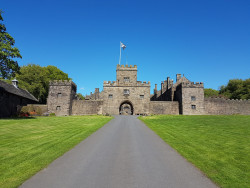
  • The Gatehouse: Although the Keep is the largest medieval building in the Castle, the John O’ Gaunt Gatehouse is the most impressive. Its two semi-octagonal towers rise 20 metres above massive sloping plinths and, with its portcullis and its battlements built out over corbels, it is perhaps the finest gatehouse of its date and type in England.
  • The Governor’s House: The Governor’s House was erected between the Gatehouse and the Well Tower in 1788. After this was completed in 1792 work began on the prison for female felons. This four-storey tower with Gothic windows and a canted front to the courtyard can be seen on the other side of the Gatehouse.
  • The Well Tower: Also known as the Witches’ Tower, this part of the castle was built in about 1325 and contains two wells and three stone-flagged underground dungeons which, traditions tells us, were used to house the Lancashire Witches prior to their trial in the castle in 1612.
  • The Male Felons Prison: Built between 1794 and 1796, this extended to the north of the Keep and was cut off from the outside world by high walls. Above these rose three four-storey towers with canted fronts and Gothic windows where the prisoners slept in separate cells.
  • Male Penitentiary: Also known as ‘A-Wing’, this Pentonville-style prison wing was added to the Castle in the 19th Century. It has 18 cells per floor and extends over 3 floors.
  • The Keep: The Keep (also known as the Lungess Tower) is a four-storey tower, 20 metres high and with a shallow buttress at each corner and halfway along each side. Its outer walls are about 3 metres thick, and it is divided internally by a central wall into two rooms on each floor. The upper storey of the Keep was rebuilt in the reign of Elizabeth I in 1585.
  • Debtors’ Prison: Also built between 1794 and 1796, two storey accommodation was built to house debtors. These were built above an attractive open arcade with Gothic arches and access onto the Castle’s main (upper) courtyard.
  • Medieval Cells: In 1796 the medieval hall of the Castle which stood to the south-west of the Keep and which housed the Crown Court was demolished. Its dungeon basement survives, however as does the adjacent Hadrian’s Tower.
  • Hadrian’s Tower: In 1796, the Great Hall of the Castle was redesigned. Its basement cells survive, together with the cylindrical Hadrian’s Tower built in 1210.
  • Crown Court: At the end of the 18th Century, a new Crown Court and Shire Hall were begun to the designs of Thomas Harrison. Reputed to be the oldest continually sitting Crown Court in the country, this oak-panelled room still features the original branding iron used on ‘malefactors’ appearing in the dock. The courtroom – but not the branding iron! – is still in use today.
  • Shire Hall: This magnificent ten-sided room is Joseph Gandy’s masterpiece. Completed in 1802, its semi-circle of Gothic pillars carry not only the arches which support the timber ceiling over the main part of the court room but also the arches of the plaster vault over the surrounding aisle. Still used as a working courtroom on rare occasions, today the Shire Hall is also the centrepiece for one the UK’s finest displays of chivalric heraldry.
  • Female Penitentiary: The last major extension to Lancaster Castle was the Female Penitentiary built in 1821. Also designed by Joseph Gandy it drew heavily on Jeremy Bentham’s ‘panopticon’ concept for the labour-saving supervision of prisoners. The panopticon is semi-circular and contains five tiers of cells, each with a window. These cells lead off curved internal galleries and are visible across an open space from the central control room.

Facilities

Parking: A limited number of on-street pay and display spaces are located at the front of the castle but these are limited to a maximum stay of 2 hours. Visitors to the castle are therefore advised to make use of one of Lancaster’s larger pay and display car parks. Car parks are well signed from all arterial routes into the city centre.

Price

Price: Paid

Price Details

  • Adults: £9.00
  • Children(age 17 and under): £7
  • Children (age 4 and under): Free
  • Family Ticket: £25 two full price and 2 children; 1 full price and 3 children; 4 children (one of whom must be over 16 years)

Pricing URL: https://www.lancastercastle.com/tours-visits/

Birthday Parties

Offer Birthday Parties: No

  • Open 7 days a week: 9.30am to 5.00pm. 
  • Except over the Christmas/ New Year period.

Address: Lancaster Castle, Castle Hill, Lancaster LA1 1YN, UK

Post Code: LA1 1YN

Council: Lancaster

County: Lancashire

  • By Train: Lancaster castle is located only 300 metres from Lancaster Railway Station. The station is on the West Coast Mainline and offers regular services both locally and nationally.
  • By Bus: Lancaster Bus Station is just over half a kilometre from the castle. The bus station is a hub for services across the Lancaster, Morecambe and Heysham area, and the bus station is also a stop for National Express services. Visitors to the castle might prefer to alight at Common Garden Street, if their bus stops there, because the route from there to the castle entrance is less steep than from the bus station.
  • By Car: Located near to Lancaster city centre, the castle is signposted from the M6 Motorway. If travelling from the north visitors should exit the M6 at Junction 34, if travelling from the south they should exit at Junction 33.
  • Parking: A limited number of on-street pay and display spaces are located at the front of the castle but these are limited to a maximum stay of 2 hours. Visitors to the castle are therefore advised to make use of one of Lancaster’s larger pay and display car parks. Car parks are well signed from all arterial routes into the city centre.

5

0 Reviews

Rating breakdown

5
80% Complete (danger)
0
4
80% Complete (danger)
0
3
80% Complete (danger)
0
2
80% Complete (danger)
0
1
80% Complete (danger)
0

More Day Outs in City of Lancaster

Get the best blog stories into your inbox!