Iron Bridge

Description

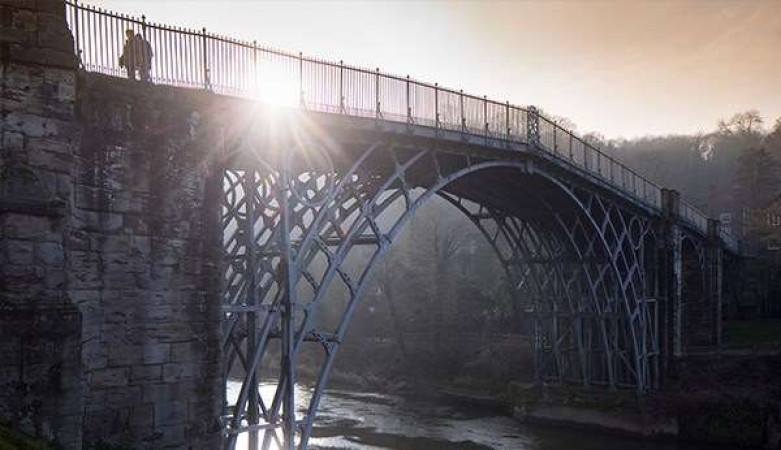
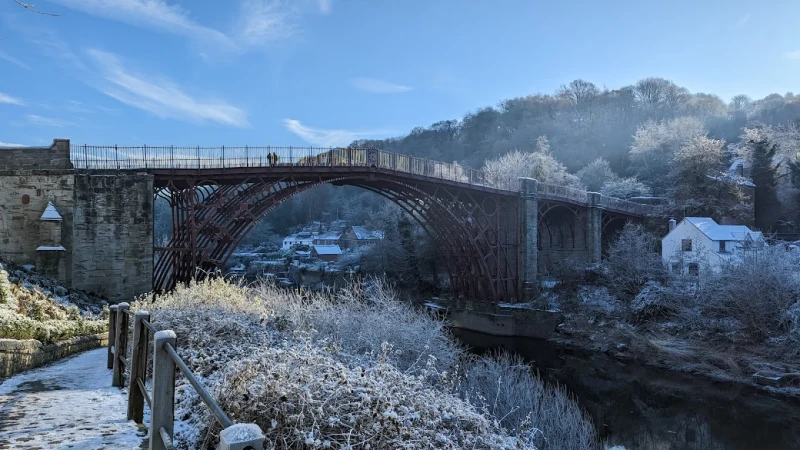
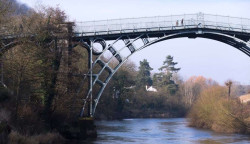
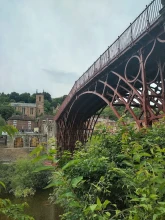
Iron Bridge The world's first iron bridge was erected over the River Severn here in Shropshire in 1779. This pioneering structure marked a turning point in English design and engineering; after it was built, cast iron came to be widely used in the construction of bridges, aqueducts and buildings.

The Iron Bridge's story began in the early 18th century, in the nearby village of Coalbrookdale. Abraham Darby pioneered the smelting of iron using coke, a process that was a catalyst fHor the Industrial Revolution. It was Abraham Darby III who cast the ironwork for the bridge that still stands today, using the same techniques developed by his grandfather. The bridge was so successful that it gave its name to the spectacular wooded valley which surrounds it, now recognised as the Ironbridge Gorge World Heritage Site. 

Free Entry. If you are looking for Best place for day out with kids and families then this is the perfect destination offering fun, adventure, and unforgettable memories for everyone.

Features

  • Paid
  • Host birthday parties: No

Features

  • 7 Things You Didn't Know About The Iron Bridge: With its magnificent iron arch, intricate detailing and ingenious engineering, the Iron Bridge is a celebrated symbol of the Industrial Revolution. Conservation work has started on the Iron Bridge to restore this historic icon, but how much do you know about the bridge? We've pulled together a list of facts about the Iron Bridge you probably don't already know.
  • 1. It was the first structure in the world made from cast iron: Built in 1779 by a team of pioneering industrialists, the Iron Bridge was made possible through advances in iron smelting that took place in the century before. Casting such large parts was complicated and required skills developed over generations.
  • 2. The bridge wasn't designed by Telford or Brunel: The man responsible for the design of the Iron Bridge was a Shrewsbury architect called Thomas Farnolls Pritchard. But Pritchard was an architect and stonemason by training and it is thought that the structure that we see today was influenced by Abraham Darby III who was experienced in working with iron.  
  • 3. The gorge, in which the bridge was built, was formed during the Ice Age: There are various geological theories about the formation of the Severn Gorge. One popular idea suggests that a large lake formed as the ice melted during the last Ice Age. As the water level rose, the lake overflowed forming fast-flowing streams which cut through the rock creating the dramatic gorge we see today.
  • 4. Until 1950, everyone had to pay a toll to cross - even the Queen: They might rule the country, but a toll is a toll. A sign advised: 'Every officer or soldier whether on duty or not, is liable to pay toll for passing over as well as any baggage wagon, mail coach or the Royal Family.' You can still see the sign on the Toll House alongside the bridge today. Tolls for vehicles were removed in 1934 but pedestrians still had to pay until 1950.
  • 5. An elephant has walked across the bridge: It's one of the best-loved images of the Iron Bridge and it proves that among the more eccentric visitors to the bridge was an elephant. In a publicity stunt promoting the Chapman's Zoo-Circus in 1932, the elephant marched across the 100-foot, 378-tonne bridge to the delight of wide-eyed onlookers.
  • 6. A long line of Quaker ironfounders were involved: Abraham Darby I of Coalbrookdale, Shropshire, first experimented with the use of roasted coal, or coke, instead of charcoal in the production of iron in 1709. His grandson, Abraham Darby III, later funded much of the construction of the Iron Bridge out of his own pocket, and paid £3000 towards its construction. That's the equivalent of £438,000 today.
  • 7. The Iron Bridge was almost sold for scrap: During the 1960s there was talk of dismantling the Iron Bridge and selling it for scrap. Thankfully in the 1970s, the site came under the guardianship of English Heritage and its predecessors, and was one of the first places in the UK to be inscribed onto the list of UNESCO World Heritage sites.

Facilities

  • Parking: There is a car park nearby, not managed by English Heritage. Parking charges apply.
  • Food & Drinks: There are a variety of facilities and places to eat in Ironbridge.

Birthday Parties

Offer Birthday Parties: No

Open any reasonable time during daylight hours.

Address: Hodge Bower, Ironbridge, Telford TF8 7JP, UK

Post Code: TF8 7JP

Council: Telford and Wrekin

County: Shropshire

  • Road Access: Adjacent to A4169. Entry to walkway from north (Ironbridge village) side.
  • Bus Access: Arriva 88, 88A 96, 99, 99A Gorge Connect service WH1 (summer Sat & Sun only)
  • Bicycle Access: Find this site on The National Cycle Network.
  • Parking: There is a car park nearby, not managed by English Heritage. Parking charges apply.

0

0 Reviews

Rating breakdown

5
80% Complete (danger)
0
4
80% Complete (danger)
0
3
80% Complete (danger)
0
2
80% Complete (danger)
0
1
80% Complete (danger)
0

More Day Outs in Telford and Wrekin

Get the best blog stories into your inbox!