Flowerdown Barrows

Description

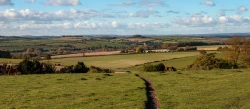
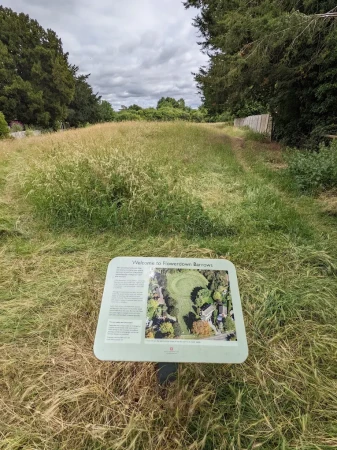
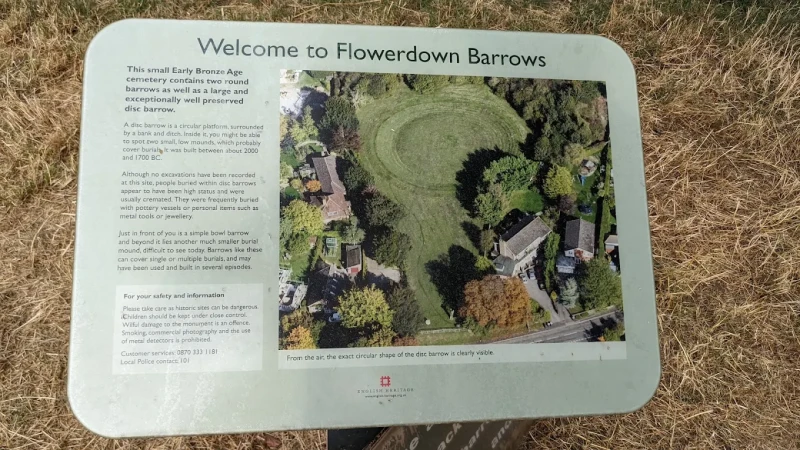
The Flowerdown Barrows are three well-preserved Bronze Age burial mounds on the edge of the village of Littleton. Constructed 4,000 years ago, they were once part of a much larger 'barrow cemetery'. There are two bowl barrows, and the largest and finest disc barrow in Hampshire.

On the edge of the village of Littleton, this tranquil site contains three prehistoric round barrows. These are burial mounds constructed in the early Bronze Age, 4,000 years ago. The barrows here, originally part of a larger group, stand on a ridge and may have acted as territorial markers. This group is a particularly important prehistoric monument as it survives so well. 

Free Entry. If you are looking for Best place for day out with kids and families then this is the perfect destination offering fun, adventure, and unforgettable memories for everyone.

Features

  • Paid
  • Host birthday parties: No

Features

  • History of Flowerdown Barrows: On the edge of the village of Littleton, this tranquil site contains three prehistoric round barrows. These are burial mounds constructed in the early Bronze Age, 4,000 years ago.
  • The barrows here, originally part of a larger group, stand on a ridge and may have acted as territorial markers. This group is a particularly important prehistoric monument as it survives so well.
  • A large proportion, almost 75 per cent, of Hampshire barrows have been destroyed or badly damaged by development or ploughing, and only 5 per cent survive intact.
  • Bowl and Disc Barrows
  • Round barrows took various forms: the group at Flowerdown includes a disc barrow and two bowl barrows.
  • Bowl barrows, the most numerous surviving form, consisted of a mound of turf, soil or rock, covering one or more burials, and usually surrounded by a circular ditch from which the mound material may have been quarried.
  • Funerary ceremonies and rituals may have taken place on the site for some time before the mound was constructed and the burials sealed. The burials were either inhumations, where a crouched body lying on its side was buried in a small pit, or cremations, where ashes, which were often contained in an urn, were placed in the ground.
  • Grave goods are occasionally found with these burials. Such items included pottery vessels containing food and drink, and weapons, flint tools and pieces of jewellery, to accompany the dead person in the afterlife.
  • Disc barrows are rare and are particularly likely to have been damaged as they are relatively low earthworks. Many survive only as crop-marks on cultivated land.
  • A disc barrow was constructed as a circular area of level ground surrounded by a ditch and an external bank, with one or more small low mounds covering burials within the central platform.
  • These burials, usually cremations, were frequently accompanied by vessels, tools and personal ornaments. The individuals were probably of high status, as excavated examples contain rich grave goods.

Facilities

Parking: Please park considerately in nearby roads.

Birthday Parties

Offer Birthday Parties: No

Open any reasonable time during daylight hours.

Address: Kennel Lane, Winchester, UK

Post Code: SO22 6PS

Council: Winchester

County: Hampshire

  • Road Access: Off B3049, out of Winchester to Littleton; at crossroads in centre of village.
  • Bus Access: Stagecoach in Hampshire 7, 68.
  • Train Access: Winchester 2 miles.
  • Bicycle Access: Find this site on The National Cycle Network.
  • Parking: Please park considerately in nearby roads.

0.00

0 Reviews

Rating breakdown

5
80% Complete (danger)
0
4
80% Complete (danger)
0
3
80% Complete (danger)
0
2
80% Complete (danger)
0
1
80% Complete (danger)
0

Get the best blog stories into your inbox!