Woodhenge

Countess Road, Amesbury, Salisbury, Wiltshire SP4 7AR, UK
1-99 Years

Description

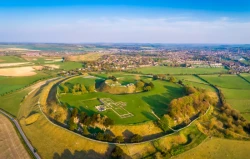
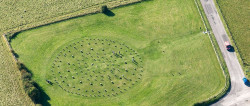
Woodhenge is an atmospheric Neolithic site close to Stonehenge. Probably built about 2500 BC, it was formed of six concentric ovals of standing posts, surrounded by a bank and ditch. The site was discovered by aerial photography in 1925, when rings of dark spots were spotted in a crop of wheat. Today, concrete markers show the positions of the timber posts.

Woodhenge is a Neolithic timber monument built in about 2500 BC, around the same time as Stonehenge, and only 2 miles away to the north-east. It was formed of six concentric ovals of standing posts, surrounded by a bank and ditch, which were built to align with the summer solstice sunrise. The site was discovered by aerial photography in 1925 and excavated in 1926–7 by Ben and Maud Cunnington, who marked the positions of the wooden posts with concrete pillars for visitors. 

Free Entry. If you are looking for Best place for day out with kids and families then this is the perfect destination offering fun, adventure, and unforgettable memories for everyone.

Features

  • Free
  • Host birthday parties: No

Features

  • History of Woodhenge: Woodhenge is a Neolithic timber monument built in about 2500 BC, around the same time as Stonehenge, and only 2 miles away to the north-east. It was formed of six concentric ovals of standing posts, surrounded by a bank and ditch, which were built to align with the summer solstice sunrise. The site was discovered by aerial photography in 1925 and excavated in 1926–7 by Ben and Maud Cunnington, who marked the positions of the wooden posts with concrete pillars for visitors.
  • Discovery and excavation: In 1925, Squadron Leader Gilbert Insall was flying near the Wiltshire village of Durrington when he spotted strange formations in the wheat crop in a field below. The photograph he took that day showed a series of dark spots and concentric rings, as well as several other marks in the same field. The larger site was known at the time as ‘Dough Cover’, and was thought to be a Bronze Age disc barrow. Intrigued, Insall returned the following year and took further photographs.
  • The Cunnington family
  • By the time the Cunningtons excavated Woodhenge, the couple had excavated a number of important prehistoric sites in Wiltshire. Ben, a wine merchant by trade, was a descendant of William Cunnington, the famous antiquarian who had excavated many barrows in the Stonehenge landscape in the early 19th century. Ever since, the Cunnington family had been honorary curators of Devizes Museum (today Wiltshire Museum). Ben had held this role since 1887.
  • A timber temple: Woodhenge consisted of six concentric rings of timber posts of varying size, forming an oval monument 40 metres (131 feet) long and 36 metres (118 feet) wide. The outermost two rings consisted of relatively small and closely spaced posts. Moving inwards was the ring with the largest posts, comprising 16 posts measuring about 35 centimetres (14 inches) in diameter, each erected using a ramp. Within this ring were three smaller ovals of posts.
  • Offerings: When Woodhenge was first excavated, many objects were found, including Grooved Ware pottery, carved chalk objects, antler picks, animal bones, flint tools, fragments of human bone and at least one human cremation. Rituals that took place at the site included the deliberate placing of objects in the ditch on either side of the entrance, around the posts and into hollows left after the posts had rotted away. Excavations in 1967 across the ditch also uncovered a pile of ten antler picks left behind by those who dug the ditch in the Neolithic period.
  • A landscape of monuments: The oval post rings at Woodhenge are aligned north-east to south-west, in the same way as Stonehenge. The horizon towards the south-west, the direction of the midwinter sunset, rises to block any view of the sunset, but to the north-east there is a clear view, so it seems likely that the monument was built to align with the midsummer sunrise.

Facilities

Parking: Free parking is available adjacent to the site. Take care when crossing over the road to the entrance gate. 

Price

Price: Free

Birthday Parties

Offer Birthday Parties: No

Open any reasonable time during daylight hours.

Address: Countess Road, Amesbury, Salisbury, Wiltshire SP4 7AR, UK

Post Code: SP4 7AR

Council: Wiltshire

County: Wiltshire

  • Road Access: 1 1⁄2 miles North of Amesbury, signposted off A345, just South of Durrington.
  • Bus Access: Salisbury Reds services 8 & X5; Stagecoach Swindon 5 (Sun only)
  • Train Access: Salisbury 9 miles.
  • Bicycle Access: Find this site on The National Cycle Network.
  • Parking: Free parking is available adjacent to the site. Take care when crossing over the road to the entrance gate. 

0.00

0 Reviews

Rating breakdown

5
80% Complete (danger)
0
4
80% Complete (danger)
0
3
80% Complete (danger)
0
2
80% Complete (danger)
0
1
80% Complete (danger)
0

Get the best blog stories into your inbox!