Rosserk Friary

Rosserk Friary, Rosserk, County Mayo, Ireland
1-90 Years

Description

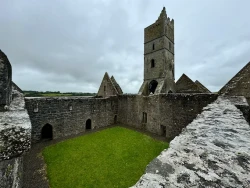
Rosserk Franciscan Friary is a remarkably complete medieval monastery that stands as one of the best things to do with kids in Mayo. Set peacefully on the picturesque shores of the secluded Killala Bay, right along the western bank of the River Moy estuary, this state-protected 15th-century national monument belongs to the historic outdoor attraction category. It provides a stunning, open-air grassy ruin where families can freely wander through old stone dining halls, climb spiral staircases inside corner walls, and search for ancient carvings made by stone masons centuries ago.

Admission to this spectacular historic destination is entirely free for all adults, teenagers, and children. Because it operates as an unguided national monument in state care under the Office of Public Works, there are no commercial booking desks, paid ticket gates, or premium tour fees to explore the grounds. Families can simply pull up to the end of the quiet country lane and set off on a self-guided historical trek at any time during daylight hours without spending a single penny.

If you are looking for the best place for a day out with family and kids that combines fresh Atlantic sea air, authentic medieval design, and real archaeological mysteries, this heritage site is an exceptional choice. The scale of the intact square bell tower and the puzzle-like layout of the old stone fireplaces and dormitories offer children a fantastic real-world look into old monastic life. Reaching the edge of the scenic river walls guarantees an active, memorable morning out that makes history feel like a genuine coastal adventure.

Features

  • Free
  • Host birthday parties: No

Features

Key Features

  • Late Irish Gothic Architecture: A highly preserved 1440s Franciscan religious compound built out of a compact bluish stone.
  • Imposing Suspended Bell Tower: A tall, square campanile mounted directly over the central chancel arch.
  • Intact Domestic Rooms: Complete surviving stone footprints of the ancient refectory, sacristy, and upper-floor dormitories.
  • Educational Day Out: A brilliant open-air classroom for children to explore medieval religious history, wartime raids, and ancient stone carvings.

Top Highlights

  • The Round Tower Stone Carving: Hidden inside the church choir is a beautiful double piscina recess used for washing holy mass vessels. On one of its tiny pillars, an ancient stone mason carved a miniature replica of a traditional Irish round tower. Kids will love playing history detective to find this secret carving, along with two tiny angels sculpted right above it.
  • The Square Campanile Bell Tower: Suspended grandly right over the middle of the church gable is a massive square bell tower. Children can stand directly beneath the heavy stone masonry arch, look up into the hollow core, and imagine how loud the massive bronze bells must have rung out across the river estuary.
  • The Rooftop Corner Staircases: Unlike many flattened ruins, this friary still features accessible stone staircases tucked away into the corners of the central court. Sure-footed older kids will find it incredibly exciting to safely step up the old stone levels to look out over the roofless walls and lanes below.
  • The Grand Four-Light East Window: Situated at the far end of the main chancel is a spectacular, towering four-light Gothic window frame. It frames the moving waters of the River Moy perfectly, making it a wonderful spot to teach kids how ancient builders used natural light to brighten up cold stone halls.
  • The Twin Chantry Chapels: Branching off the south transept of the church are two distinct, semi-private chantry chapels featuring their own historic windows and altars. Children can explore the interconnected stone thresholds and see real medieval fireplaces where the friars used to keep warm during cold winter prayers.

Detailed Inventory

  • The Decorative Double Piscina: The famous stone washing basin recess located in the south-east corner of the chancel.
  • The Franciscan Third Order Cloister: The square central green courtyard enclosed on all four sides by the main stone buildings.
  • The Late Gothic West Gate Doorway: The highly decorative main stone entrance archway leading into the single-aisle nave.
  • The Monks' Refectory Hall: The spacious ground-floor dining room situated on the northern side of the central court.
  • The Upper-Floor Dormitory: The long, elevated sleeping quarters positioned directly above the ancient sacristy and chapter house.
  • The Joyce Family Foundation Stones: The original 1440s base masonry commissioned by the prominent local Joyce clan.
  • The 1590 Burned Boundary Markings: Faint historical scorch traces left from the destructive raid by Sir Richard Bingham during the Elizabethan era.

Facilities

  • Toilets: There are no public toilets, baby-changing amenities, or indoor visitor reception areas anywhere on this unguided national monument site. Families should plan to use the public restrooms in Ballina or Killala town before driving down the access lane.
  • Buggy Parking: There is no designated or secure pram storage on the property. The entry trail is flat, but the interior spaces feature narrow stone doorways, spiral stairs, and grassy lips, making a child carrier backpack much more practical than a pushchair.
  • Food Options: No commercial cafes, snack kiosks, or vending machines operate at the ruins. Parents are advised to pack a pocket picnic or juice boxes to enjoy by the water, or visit the family-run bakeries and cafes in nearby Ballina.

What to see

What Visitors Love

  • The site is wonderfully peaceful and completely untouched by commercial gift shops, giving kids a real sense of old-world discovery.
  • Having the freedom to walk inside real two-story stone rooms and lookup through roofless towers makes the history highly visual for children.
  • The fact that it is completely free to enter and offers a small car park right outside makes it a highly convenient, zero-cost family pitstop.

What Visitors Don't Like

  • The total lack of any roofed shelter or public restrooms can make things difficult if a sudden Atlantic rain shower moves in.
  • The narrow rural roads leading down to the monument can feel a bit tight when passing oncoming family vehicles.
  • There are no digital interactive screens or guide staff, so parents need to read the entrance plaques aloud to keep younger children engaged.

Targeted FAQ

  • Is Rosserk Friary worth it for toddlers?: While toddlers will enjoy a short stroll across the green central courtyard, the uneven stone thresholds, low walls, and steep steps require constant hands-on supervision. A child carrier backpack is highly recommended for parents visiting with very young kids.
  • How long does a visit to Rosserk Friary take?: A standard family visit to walk through the domestic rooms, look for the round tower carvings, and take photos along the River Moy takes between 35 and 50 minutes.
  • Where is the best place to park for Rosserk Friary?: The best place to park is in the dedicated public parking zone located right at the end of the access lane, directly outside the main friary entrance path.
  • Are there cheap indoor activities in Mayo for rainy days?: If the weather turns wet, families can head to covered local history museums, visit the indoor visitor centre at nearby Céide Fields, or find budget-friendly indoor soft play hubs in Ballina town centre to stay completely dry.

Price

Price: Free

Birthday Parties

Offer Birthday Parties: No

The outdoor monument site is openly accessible to the public daily throughout the year.

  • Monday to Sunday: Open 24 hours (Access available during daylight hours)
  • Important Safety Note: Visiting after dark is highly discouraged, as the ancient stone doorways, steps, and river banks feature absolutely no artificial lighting.

Address: Rosserk Friary, Rosserk, County Mayo, Ireland

Post Code:

Council: Mayo County Council

County: County Mayo

  • By Car: Located roughly 5 miles (8 km) north of Ballina and 4.3 miles (7 km) southeast of Killala along the coastal routes. From Ballina, follow the R314 north, take the local signposted turn for the river estuary, and follow the narrow lane to the end.
  • By Bus: Regional bus lines link Ballina town centre to Killala village, from which families can book a brief 5-minute local taxi ride straight down to the friary gates.
  • Parking: A dedicated, free public parking area is provided for family cars directly outside the main pedestrian entrance path to the ruins.

0.00

0 Reviews

Rating breakdown

5
80% Complete (danger)
0
4
80% Complete (danger)
0
3
80% Complete (danger)
0
2
80% Complete (danger)
0
1
80% Complete (danger)
0

Get the best blog stories into your inbox!