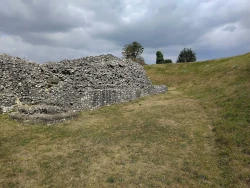
Ludgershall Castle and Cross

Description

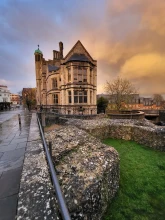
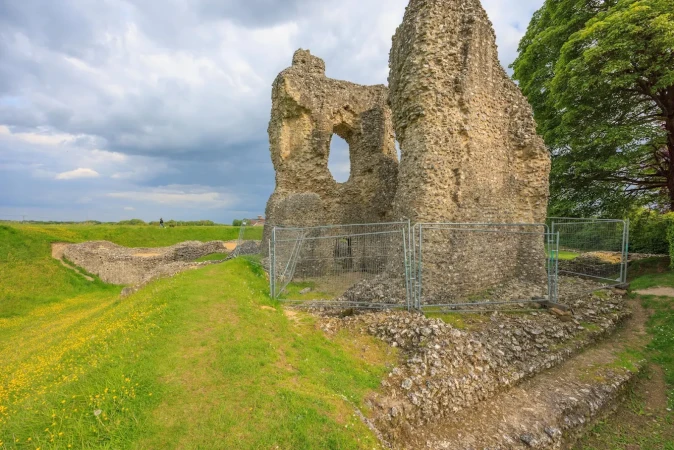
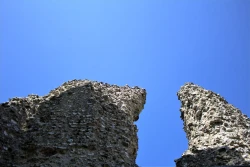
Ludgershall Castle and Cross Probably begun in the late 11th century by a sheriff of Wiltshire, Ludgershall was much improved in the 13th century by King John and his son Henry III, who used the castle as a hunting lodge. Three large walls and extensive earthworks survive, while in the centre of the nearby village are the remains of a 14th-century cross.

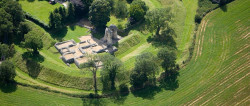
Ludgershall Castle was probably built in the late 11th century by Edward of Salisbury, sheriff of Wiltshire, and had passed into the hands of the Crown by the early 12th century. Lying on the edge of a medieval forest, it was frequently used as a royal hunting lodge. The castle was much improved in the 13th century by King John and his son Henry III, but had fallen into ruin by the 16th century. 

Free Entry. If you are looking for Best place for day out with kids and families then this is the perfect destination offering fun, adventure, and unforgettable memories for everyone.

Features

  • Free
  • Host birthday parties: No

Features

  • History of Ludgershall Castle: Ludgershall Castle was probably built in the late 11th century by Edward of Salisbury, sheriff of Wiltshire, and had passed into the hands of the Crown by the early 12th century. Lying on the edge of a medieval forest, it was frequently used as a royal hunting lodge. The castle was much improved in the 13th century by King John and his son Henry III, but had fallen into ruin by the 16th century.
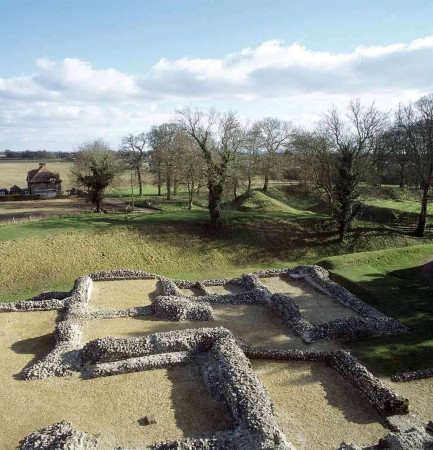
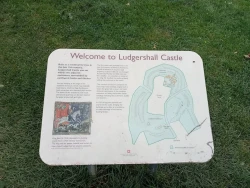
  • The first castle: The 11th-century castle was set within two adjacent enclosures, surrounded by earthwork banks and ditches. Fieldwork has established that more than 1,000 years before a castle was built the southern enclosure may originally have been a small Iron Age fort.
  • A hunting retreat: Henry III (r.1216–72), who inherited the castle from his father, King John, was evidently fond of Ludgershall. He visited at least 21 times, and made many additions and improvements to the castle between 1234 and 1251, transforming it into a lavish residence.
  • The king’s manor: From about 1317 Ludgershall was referred to as ‘the king’s manor’, and was given to successive queens and royal dependants, including Queen Philippa (d.1369), wife of Edward III, and her daughter Isabel, Countess of Bedford (d.1379).
  • The surviving buildings: Ludgershall Castle was set within two adjacent enclosures, surrounded by earthwork banks and ditches. A modern farm occupies the middle of the castle but the original outline of the two enclosures can still be seen. The northern enclosure was inserted or superimposed onto an earlier, southern enclosure, the banks of which are now much altered and quarried.
  • History of Ludgershall Cross: In the main street of Ludgershall is the surviving lower part of a large medieval cross. The cross shaft has fine sculpture showing scenes from the death of Jesus, including the Descent from the Cross.
  • The east face: The Ludgershall Cross is remarkable for its fine medieval decoration. Carved into each face of the square shaft-base is an elaborate niche, and within each niche is a sculptural scene. Although the carving is now much weathered, three of the four scenes can still be recognised.
  • South, west and north faces: The scene on the south panel, with a tall central figure standing between two smaller figures, has previously been identified as the Three Marys (Mary Magdalene and two other Marys, probably including Mary of Clopas but not necessarily including Jesus’ mother). It has been suggested[1] that this is more convincingly identified as the ‘Road to Emmaus’ scene in which the resurrected Jesus (the taller figure) meets two disciples (the smaller figures either side) after his death.

Facilities

  • Parking: There is a small free car park with four spaces on Castle Street 50 metres from the site. A further car park (not managed by English Heritage) can be found in St James Street in the town centre. It is possible to drive to the gate at the entrance to the castle grounds for dropping off.
  • Food & Drinks: Shops and places to eat can be found in Ludgershall town centre.
  • Toilets: Public toilets can be found in Ludgershall town centre.
  • Dogs: Dogs on leads are welcome.

Price

Price: Free

Birthday Parties

Offer Birthday Parties: No

Open any reasonable time during daylight hours.

Address: Castle Street, Ludgershall, Andover, UK

Post Code: SP11 9QT

Council: Wiltshire

County: Wiltshire

  • Road Access: Located on the north side of Ludgershall, off A342.
  • Bus Access: Salisbury Red ‘Active 8’ service, Stagecoach 8 & 80.
  • Train Access: Andover 7 miles.
  • Bicycle Access: Find this site on The National Cycle Network.
  • Parking: There is a small free car park with four spaces on Castle Street 50 metres from the site. A further car park (not managed by English Heritage) can be found in St James Street in the town centre. It is possible to drive to the gate at the entrance to the castle grounds for dropping off.

0

0 Reviews

Rating breakdown

5
80% Complete (danger)
0
4
80% Complete (danger)
0
3
80% Complete (danger)
0
2
80% Complete (danger)
0
1
80% Complete (danger)
0

Get the best blog stories into your inbox!