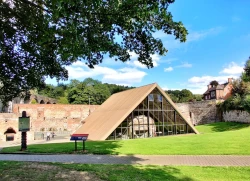
Bridgnorth Cliff Railway

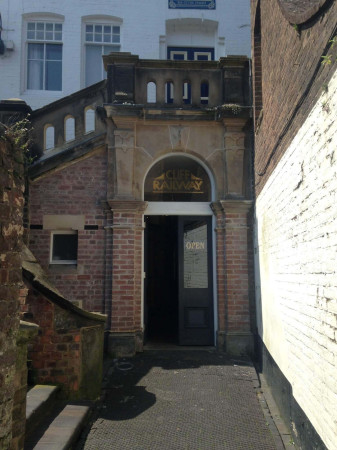
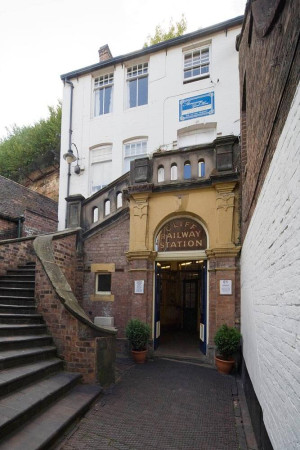
6A Castle Terrace, Bridgnorth, Shropshire, WV16 4AH, England
1-90 Years
Paid

Description

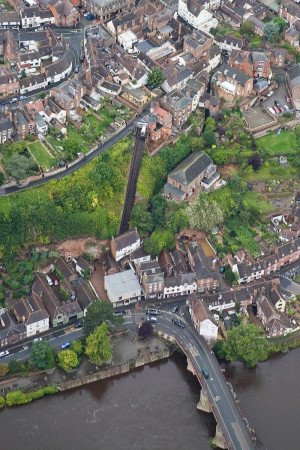
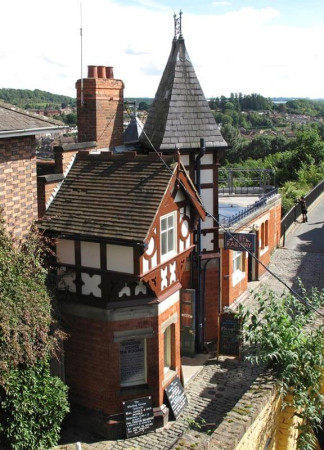
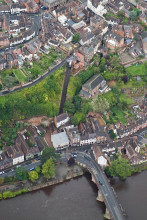
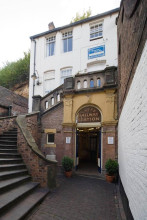
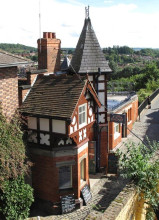
Bridgnorth Cliff Railway is England’s oldest and steepest inland electric funicular railway, connecting High Town and Low Town in Bridgnorth. It has been a vital part of the town since opening on 7th July 1892, offering an easy alternative to climbing around 200 steps. The railway is both a historic attraction and a working transport service for locals and visitors.

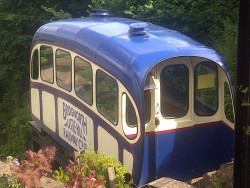
The railway operates two passenger cars on parallel tracks, counterbalancing each other as they travel up and down the 201 ft track with a 111 ft vertical rise. Each car can carry 18 passengers and offers views over the River Severn and the town. Visitors can experience a unique journey on a heritage railway that remains in daily operation.

Tickets cost £2.50 return, with children under 6 travelling free, well-behaved dogs free, and discounts available for groups of 15 or more. 

Bridgnorth Cliff Railway offers a short but memorable ride that combines history, engineering, and convenience. It is an essential experience for anyone visiting Bridgnorth, providing a practical way to explore both parts of the town. With over a century of heritage, it remains a proud and much-loved landmark.

Features

  • Paid
  • Host birthday parties: No

Features

Welcome to Bridgnorth Cliff Railway - England’s Oldest and Steepest Inland Electric Funicular Railway!

  • For a century and a third, Bridgnorth Cliff Railway has been transporting the people of Bridgnorth up and down the 111 ft sandstone cliffs that separate High Town from Low Town, and the River Severn. It is first and foremost a working railway; its importance to both the townspeople of Bridgnorth and to visitors to the town is undiminished by age.
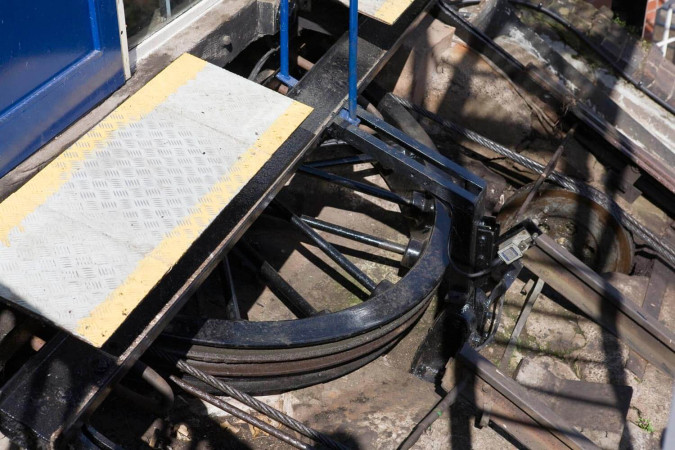
  • The railway operates two cars on parallel tracks. Connected by steel ropes, the carriages serve to counterbalance each other – as one rises to the top station, the other runs to the bottom station. The cars are now powered by an electric winding engine, but were originally driven by a system of water balance, each carriage carrying water ballast in a tank beneath the passenger compartment.

What to see

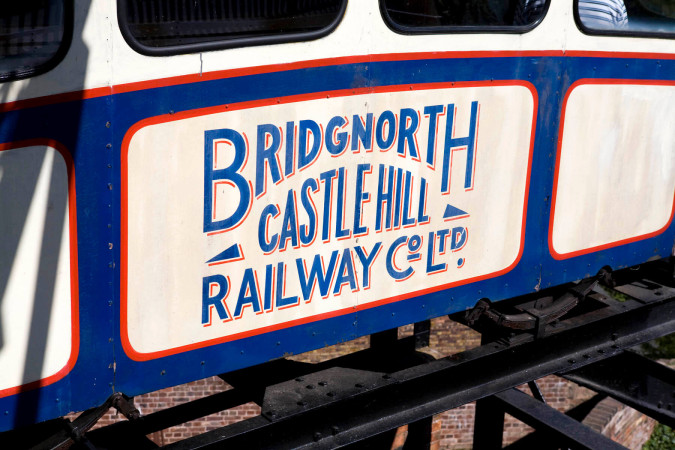
  • Cars: The original cars were of wooden construction, on a steel chassis. The cars were replaced with “up-to-date” cars of aluminum monocoque construction in 1955. Simple sliding doors at each end of the cars run on their original ball bearing rollers. Each car weighs approximately 5.5 tonnes when fully laden with 18 passengers.
  • The track: The track is 201 feet long, with a rise of 111 feet and consists of a double run of track – one for each car. Concrete steps run between the 2 tracks. The tracks are standard bull head rails, of about 1972 vintage. The gauge is 3 ft 6 ins. The original sleepers were timber and were the full width of both tracks. 
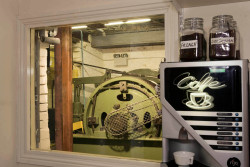
  • Winding gear: The present winding gear is of the type used in collieries. It is situated below the Top Station and was installed in 1955. The ropes wind on to 2 winding drums – one winding on as the other winds off. There is a system of 3 reduction gears reducing the the speed of the motor from 650 rpm down to 30 rpm on the drum. The final gear and winding drums are some 4 ft in diameter.
  • Compressed air system: A fail-safe compressed air system operates one of the 3 braking systems. Two large steel weights act to keep brake shoes applied to the two 4 ft diameter brake drums. Compressed air at a pressure of between 50 and 100 p.s.i. operates 2 vertical pneumatic rams, which act against the weights to remove the brake. 
  • Driving controls: The driver’s 2 indicator panels consist of 2 air pressure gauges, a speed indicator, a voltage meter, an ammeter, a trip indicator and various speed and door control lights. The controls pictured here consist of the motor control handle, which controls the speed and direction of the motor, and the compressed air brake (the brass handle on the right of the picture). In addition, the driver must stand on a floor mounted “dead man’s pedal” in order to start driving.
  • Ropes: There are 3 steel safety ropes – a separate one from each car to the winding drum, and a safety rope running from one car to the other via the winding wheel. These are 26mm multi-strand ropes tested to an actual breaking strain of 58 tonnes. They are examined in great detail for defects every 6 months, and are replaced every 5 to 7 years

Price

Price: Paid

Price Details

  • Tickets £2.50 return
  • Children under 6 years old free
  • Discounts for groups of 15 or more
  • Well-behaved dogs free

Pricing URL: https://bridgnorthcliffrailway.co.uk/

Birthday Parties

Offer Birthday Parties: No

  • Monday-Saturday: 9.00 to 18.00 hrs
  • Sunday: 12 noon to 18.00 hrs

Address: 6A Castle Terrace, Bridgnorth, Shropshire, WV16 4AH, England

Post Code: WV16 4AH

Council: Shropshire

County: Shropshire

From North Wales

  • A5 to Shrewsbury then A458 to Bridgnorth.
  • From the North M6/M54 to Telford then A442 to Bridgnorth.

From the South

  • M5/M6 to Birmingham, M54 to Telford then A442 to Bridgnorth

5

0 Reviews

Rating breakdown

5
80% Complete (danger)
0
4
80% Complete (danger)
0
3
80% Complete (danger)
0
2
80% Complete (danger)
0
1
80% Complete (danger)
0

Get the best blog stories into your inbox!