Description
Ballyallaban Ringfort is a fantastic choice if you are searching for the best things to do with kids in County Clare. Situated directly beside the scenic R480 road just south of Ballyvaughan village, this remarkably intact ancient earthwork provides local families with a brilliant gateway to Ireland's early medieval heritage. It serves as an inspiring, educational day out for parents looking to introduce curious school children, pre-teens, and teenagers to ancient archaeology, defensive architecture, and local folklore tracks.
Standard admission to explore this striking National Monument is completely free, making it a highly budget-friendly option for rural family exploration. Families can wander around the earthen ramparts, inspect the deep defensive trenches, and enjoy the dramatic limestone scenery without worrying about steep commercial packages or hidden booking fees. The accessible roadside positioning makes it a stress-free cultural spot to drop into spontaneously while touring the coastal paths of Galway Bay or heading toward the central Burren hills nearby.
If you are looking for the best place for a day out with family and kids, this unique historic monument seamlessly connects wild Irish nature with early settlement history. It gives children an authentic glimpse into the defensive daily life of early medieval farming communities and introduces them to ancient engineering layouts, protective moats, and old mature tree canopies. Because the open site provides a calm, open-air environment that encourages active outdoor exploration, it offers an excellent atmosphere for young minds to discover historical ruins.
Features
- Free
- Host birthday parties: No
Features
Key Features
- Intact Earthen Earthworks: The ancient site features an authentic circular layout consisting of a large internal living area surrounded by high soil ramparts.
- Defensive Water Trench: The perimeter contains a prominent encircling moat excavated by early builders that still collects natural rain water today.
- Mature Beech Canopy: The ruins host a beautifully developed grove of old trees growing across the structure, providing a unique woodland atmosphere.
Detailed Highlights
- The Circular Living Rath: This central interior area measures roughly 100 feet in diameter and forms the heart of the ancient fort layout. Kids will love stepping inside the circular arena to walk where early medieval families once lived and protected their farm animals. A helpful peer note: children are usually fascinated to learn how this spacious interior would have originally held multiple thatched wooden roundhouses safely behind the main walls.
- The Excavated Soil Ramparts: These impressive earthen banks extend the total width of the fortification to around 200 feet when including the outer boundary lines. Young explorers enjoy climbing carefully along the grassy slopes to test the defensive viewpoints. It is highly engaging because kids can look down into the trenches to see exactly how difficult it would be for historic invaders to scale the walls.
- The Protective Water Fosse: This deep, wide ditch encircles the entire exterior base of the soil embankments. Children love looking for frogs and water bugs inside the trench when it naturally fills up with fresh rainwater after heavy Irish downpours. It serves as an excellent practical example showing how ancient Irish settlers used basic water engineering to defend their homes.
- The Historic Palisade Footprint: This refers to the top ridge of the high earthen embankments where protective fencing once stood. Parents can explain how early settlers drove sharp wooden stakes or timber palisades tightly into the ground to create an impenetrable barrier. It helps teenagers visually reconstruct the fort's complete medieval appearance in their minds for educational school history projects.
- The Mature Tree Canopy: A thick grove of beautiful, mature beech trees now grows across much of the earthen monument structure. Children enjoy looking up at the high branches and exploring the shaded paths underneath the rustling leaves. It serves as a beautifully atmospheric indoor-feeling outdoor space where older kids can capture dramatic shadow photographs against the historic banks.
Inventory of Nearby Monuments, Areas & Exhibits
- The Earthen Rath Fort: The primary circular earthen defensive structure featuring high soil ramparts and an outer ditch system.
- The Encircling Fosse Moat: The deep, wide surrounding defensive trench excavated from the earth to trap water.
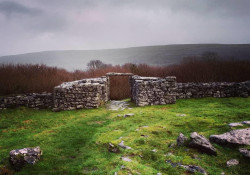
- Cahermore Stone Fort: A remarkable, thick-walled circular limestone fortress situated just a short walk away within the same National Monument zone.
- The Restored Lintel Entranceway: A massive, two-metre-long stone slab spanning the entrance turret at the neighbouring Cahermore fort.
- The Internal Medieval Rooms: The stone foundations of historic rectangular buildings built directly against the interior fort walls.
- The Outer Concentric Wall: A large secondary limestone boundary structure circling the inner stone fort measuring 120 metres across.
- The Radiating Animal Stockades: A series of smaller subdivision stone walls built to herd and separate farm livestock safely.
- The Archaeological Excavation Zone: The historic ground sector where researchers famously discovered 14th-century medieval scallop shells.
- The Rathborney Informational Display: A dedicated, weatherproof educational plaque providing detailed maps and history timelines for visiting families.



 0.66 miles