
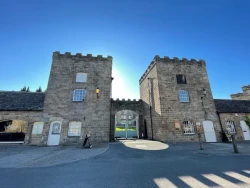
St Mary's Church, Studley Royal

National Trust - Studley Royal Park, Fountains, Ripon, North Yorkshire HG4 3DY, UK
1-99 Years

Description

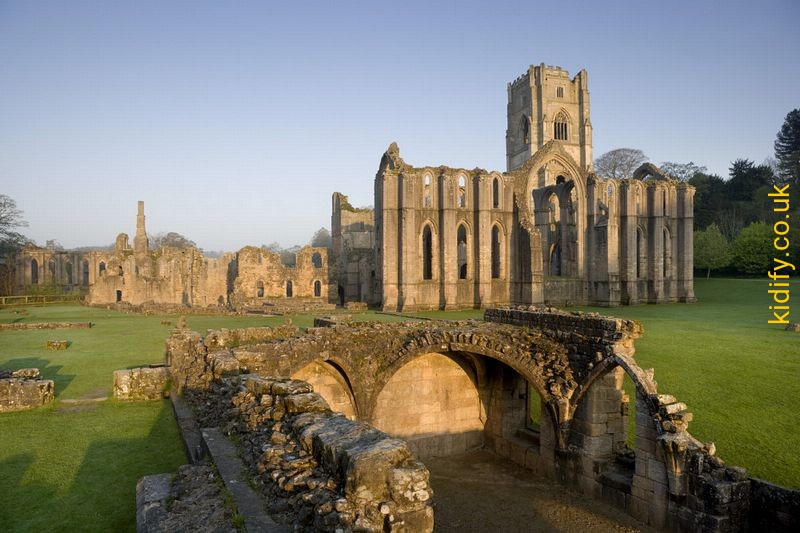
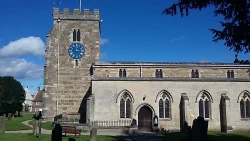
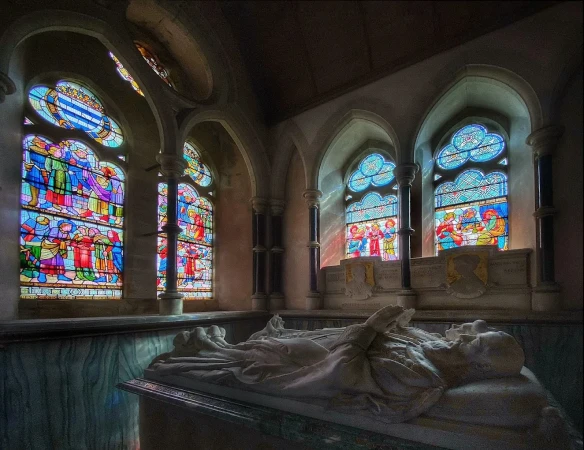
St Mary's Church, Studley Royal The magnificent St Mary's Church is one of the finest examples of High Victorian Gothic Revival architecture in England. It was designed in the 1870s by the flamboyant architect William Burges. Set within Studley Royal Park, a World Heritage Site which also includes the ruins of Fountains Abbey, the church has been called Burges's 'ecclesiastical masterpiece'.

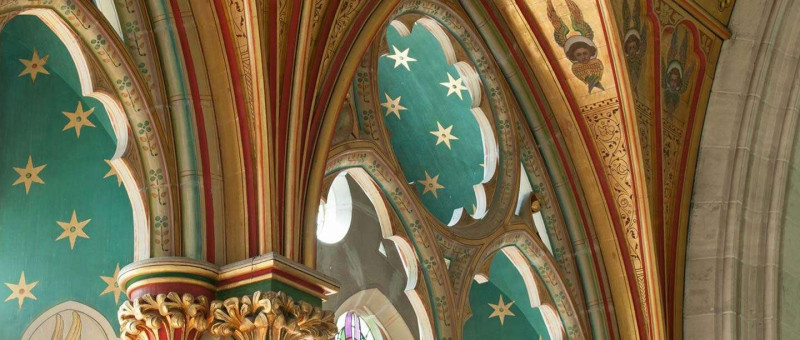
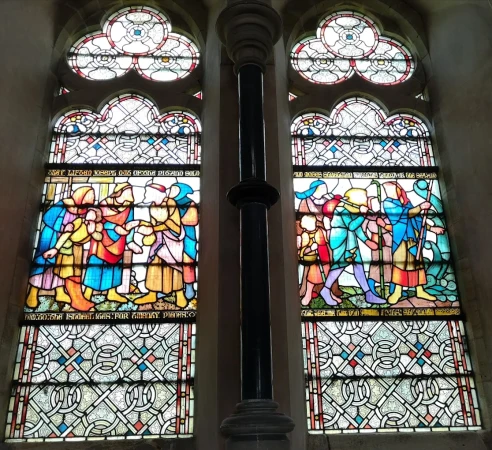
The church was built by the Marquess and Marchioness of Ripon following a tragic family death in 1870. Its extravagantly decorated interior is influenced by 13th century English Gothic styles and displays coloured marble, stained glass, a splendid organ, and painted and gilded figures in all their original glory. 

Free Entry. If you are looking for Best place for day out with kids and families then this is the perfect destination offering fun, adventure, and unforgettable memories for everyone.

Features

  • Free
  • Host birthday parties: No

Features

  • History of St Mary’s Church, Studley Royal: When the estates of Fountains Abbey and Studley Royal were united in 1767, a celebrated medieval monastic ruin was incorporated into one of England’s finest 18th-century landscape gardens. The most significant later addition to this setting, now a World Heritage Site, is the Gothic revival Anglican church of St Mary. Created partly as a result of a tragic family death in 1870, St Mary’s Church was designed by William Burges in an eclectic Gothic style for the Marquess and Marchioness of Ripon in 1870 and completed in 1878. A masterpiece of an astonishingly inventive designer, it is rich in decorative detail and symbolism.
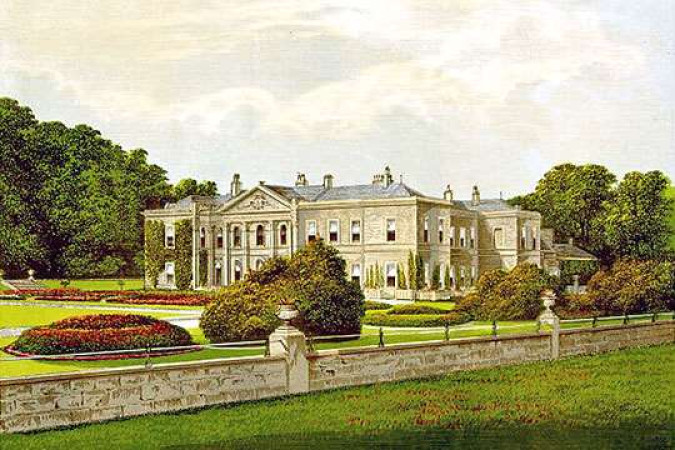
  • Tragic Origins: In April 1870 a small group of aristocratic tourists on an expedition to Marathon in Greece was kidnapped by bandits and held to ransom. On 21 April Greek soldiers attempted to rescue them, but in the ensuing skirmish four of the hostages were killed. Among the victims of what became known as the Dilessi Massacre was Frederick Vyner, whose widowed mother, Lady Mary Vyner, lived at Newby Hall, Yorkshire. His sister, Henrietta, was married to George Robinson, Earl de Grey (from 1871 1st Marquess of Ripon), who owned the neighbouring estate of Studley Royal and Fountains Abbey.
  • The Architect of St Mary’s Church: Both churches were designed by William Burges (1827–81). It is not known why Lady Mary and the Ripons chose him, but they had friends in common. The most significant was the 3rd Marquess of Bute, who had been an undergraduate at Oxford with Frederick Vyner – in 1867 Bute and Vyner had travelled to Iceland together. Bute commissioned the works by which Burges is now best remembered, the transformations of Cardiff Castle and Castell Coch in Glamorgan into visions of medieval Gothic splendour.
  • The Patrons: The Marquess of Ripon (1827–1909) was a distinguished Liberal politician with radical tendencies. His career came to a climax in 1880, when Gladstone appointed him Viceroy of India, a post he held until 1884.
  • As a young man, Lord Ripon was influenced by Christian Socialism, which emphasised religion’s contemporary social mission. He combined this with a deep admiration for the religious life of the Middle Ages and for Gothic architecture. If he only had ‘half a million of tin’, he wrote to a friend in 1853, he would ‘turn that Fountains Abbey, restored and beautified into a Working-man’s University’.[1] This was partly a joke, although there is evidence that in 1873 he consulted Burges about a restoration of the abbey.
  • Design and Building of the Church: Despite the story of St Mary’s being designed ‘on the spot’ it is a deeply considered building, to every detail of which Burges gave great attention. This care is evident in the choice of site. St Mary’s is placed at the western end of the avenue of lime trees that crosses the estate from south-west to north-east, and is aligned on the west front of Ripon Minster to the east. The church stands about 80 metres to the east of an obelisk erected in about 1805, which it supplants as a prominent accent in the landscape.
  • Influences: Many of the church’s most striking features, such as the double tracery of the chancel and sanctuary, are derived from 13th-century England, most notably the Angel Choir at Lincoln Cathedral. One of the ways that Burges sought to ‘develop’ Gothic, however, was by combining ideas derived from an eclectic range of medieval models, mixing different periods and countries. In his detailed analysis of Burges’s sources for St Mary’s, the architect’s biographer, J Mordaunt Crook, has identified influences from churches and cathedrals in Poitiers (the spiral staircase to the organ loft), Verona (the trefoil profile of the nave roof) and Padua (the sanctuary dome).
  • Craftsmen at St Mary’s: The builder of St Mary’s was John Thompson, whose large firm was based in Peterborough; according to the 1871 census he employed 550 men. The foundation stone was laid on 25 March 1871. Burges provided a silver trowel for the occasion, and he described the ceremony in a letter to Lord Ripon.
  • Later History of St Mary’s: St Mary’s was built as a parish church, and continued in use as such until 1969. On the death of the 2nd Marquess of Ripon in 1923, Studley Royal and Fountains were bought by the Vyner family. In 1966 the nucleus of the estate was sold to the county council of the West Riding of Yorkshire. The National Trust acquired the estate from the council’s successors, North Yorkshire County Council, in 1983.

Facilities

  • Parking: There is a free car park at the Fountains Abbey and Studley Royal Visitor Centre, a ten minute walk from the church. The Studley Royal Deer Park car park is closer to the church but is pay and display.
  • Food & Drinks: There is a restaurant located at Fountains Abbey Studley Royal visitor centre and a tearoom in the Studley Water Garden. These are not managed by English Heritage. 
  • Toilets: You can find toilet facilities in the Studley Royal car park or at the visitor centre.
  • Dogs: Dogs on short leads are welcome outside the church, but only guide dogs are permitted inside the church.

Price

Price: Free

Birthday Parties

Offer Birthday Parties: No

Open daily from end of March - end of October 1pm – 3:30pm.

Address: National Trust - Studley Royal Park, Fountains, Ripon, North Yorkshire HG4 3DY, UK

Post Code: HG4 3DY

Council: North Yorkshire

County: North Yorkshire

  • Road Access: Located 2 1⁄2 miles W of Ripon, off B6265; in the grounds of the Studley Royal Estate.
  • Bus Access: Dales & District 139 (operated by The Little Red Bus on Sun & Bank Hols)
  • Bicycle Access: Find this site on The National Cycle Network.
  • Parking: There is a free car park at the Fountains Abbey and Studley Royal Visitor Centre, a ten minute walk from the church. The Studley Royal Deer Park car park is closer to the church but is pay and display.

0

0 Reviews

Rating breakdown

5
80% Complete (danger)
0
4
80% Complete (danger)
0
3
80% Complete (danger)
0
2
80% Complete (danger)
0
1
80% Complete (danger)
0

More Day Outs in North Yorkshire

Get the best blog stories into your inbox!